
Every conference, gala dinner, prizegiving and quiz night eventually meets the same problem: the venue's pull-down screen is too small, too low, and bolted to the wrong wall. The production-industry answer has been the same for decades — the fast-fold screen — and we now stock complete kits in four sizes, from boardroom to big night out.
What a fast-fold actually is
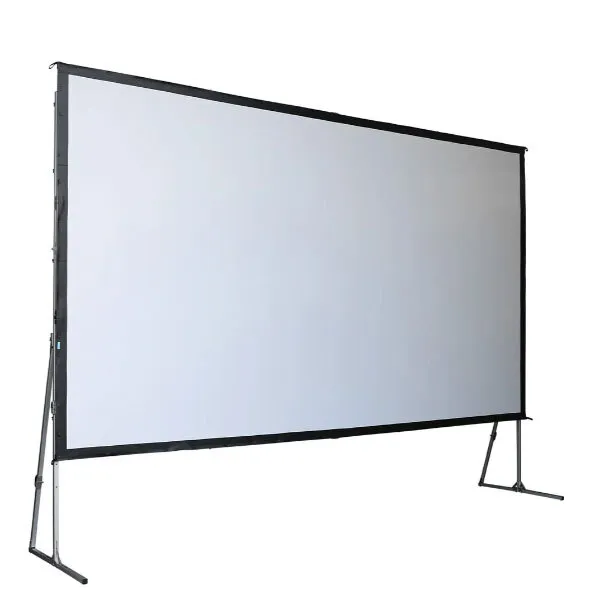
A fast-fold is a folding aluminium frame that snaps together in minutes without tools, with a projection surface that stretches over it. Our Fast-Fold kits come complete: frame, legs, both front and rear projection surfaces, and a bottom drape so the view under the screen is finished fabric rather than scaffolding and cables. Freestanding on its legs, it goes wherever the sight lines are best — not wherever a previous owner put a bracket.
Sizing: use the back row, not the room
The rule of thumb we spec by: the furthest viewer should sit no more than about six times the screen height away. In practice, across our four kits:
120” (2.65 m wide) — boardrooms, AGMs, breakout rooms; readable to roughly 9 m. 160” (3.54 m) — the all-rounder for wedding receptions, gala dinners and school halls; good to about 12 m. 200” (4.42 m) — conferences and community movie nights, comfortable at 15 m. 250” (5.53 m) — the full production-scale picture for large venues and outdoor cinema. All four are 16:9, so slides and video fill the frame with no letterboxing.
The rear-projection trick
Because every kit includes a rear surface as well as a front one, you can put the projector behind the screen. No beam shining in the presenter's eyes, no shadow when the bride, the CEO or a hundred school kids walk in front of the picture, and the floor space in front stays clear for the audience. Front projection buys maximum brightness; rear projection buys clean sight lines — owning both surfaces means deciding per event, not per purchase.
Making the picture worthy of the screen
A big screen is honest: it shows exactly what you feed it. Use the shortest good-quality signal run you can, put the projector on a solid base (a wobbly table is visible at 160 inches), and for multi-screen corporate shows or anything more ambitious than slides, playback software like Resolume turns one operator into a video department. Running content outdoors? Wait for genuine darkness and even a modest projector looks heroic at 200”.
Planning a conference, fundraiser movie night or awards evening? Tell us the room dimensions and audience size and we will tell you which screen — and whether front or rear projection will serve the night better. It pairs nicely with the rest of our corporate AV checklist.