
“Can you add some smoke?” is one sentence that means three completely different things. Haze, fog and low-lying fog are distinct effects made by distinct machines, and buying the wrong one is a common — and avoidable — mistake. Here is how to tell them apart.
Haze: the invisible effect
Haze is a fine, even mist you should barely notice — until the lights come on and every beam becomes a solid shaft of colour. It hangs in the air for a long time and works at low concentrations. If your goal is “make the lighting look amazing” at a concert, ball or church service, you want a hazer, not a fogger — something like the AmHaze Stadium 2X IP we covered here, fed with proper hazer fluid (never fog fluid in a hazer — it clogs the works).
Fog: the visible effect
Fog is the opaque burst — the theatrical reveal, the haunted-house billow, the dance-floor blast. It reads as an effect in itself, then dissipates relatively quickly. Foggers are the cheapest of the three machine types, which is exactly why so many people buy one when they actually wanted haze.
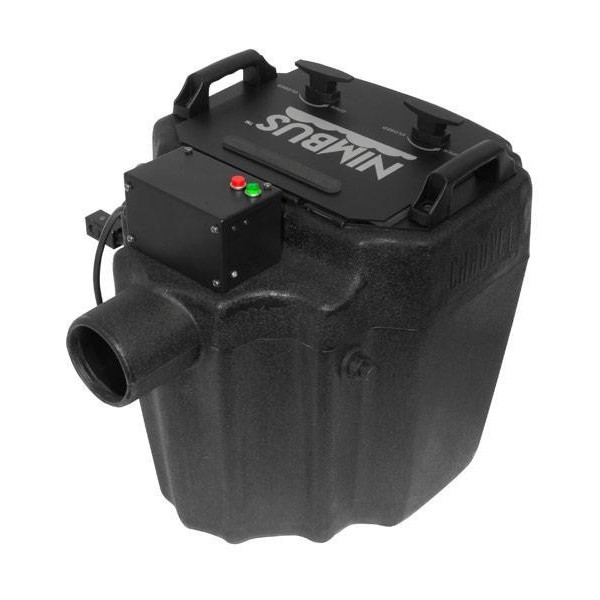
Low fog: the floor-hugging classic
The carpet of white rolling across the floor — first dances, ballet, every awards-show entrance — is low-lying fog, and it only stays low because it is cold. The traditional method is dry ice in a heated tank: the Chauvet Nimbus is the industry-standard machine and the effect is still unbeatable. If sourcing dry ice on a Saturday is not your idea of fun, the Cumulus HP produces a thick low-lying effect from standard fluid, no dry ice required — a favourite with wedding venues that run the effect weekly.
The paperwork paragraph (read it, seriously)
All three effects can trigger optical smoke detectors. Professional venues have an isolation procedure — use it. In halls, marquees and other DIY venues, talk to the building owner and their alarm provider before the event, not after the brigade arrives. It is a phone call; make it early and atmospheric effects are drama-free.
Unsure which machine fits your event, or need fluid and spares for one you own? We stock and run this gear ourselves — ask us anything.
Browse the range Ask us about this gear
Product imagery courtesy of our partners at MDR Lighting, New Zealand distributor for Chauvet and ChamSys.