
Nothing shapes how a gig sounds — and how stressful it is to run — more than the mixing console. The good news: digital mixing has become so affordable that the old compromises are mostly gone. The decision now is about workflow, not budget. Here is how to get it right the first time.
Count channels the honest way
List every source at your busiest realistic event, not your average one: each vocal mic, each instrument line, each playback device — a drum kit alone can swallow eight channels. Then add four spare, because the guest speaker with the extra laptop always turns up. Under-buying channels is the single most common mixer mistake we see, and it is why "16 channels" desks that offer only eight mic preamps disappoint people.
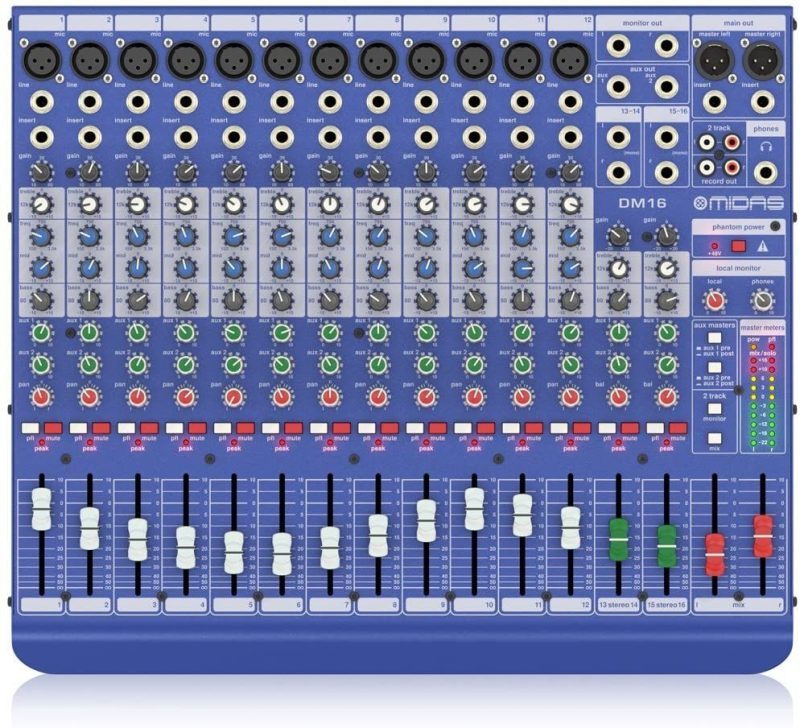
Analogue: see everything, teach anyone
Analogue's virtue is that the whole desk is visible — one knob, one job. For rooms where many different hands run the desk and nobody wants menus, an analogue desk like the Midas DM16 (with genuine Midas preamps) or the budget-friendly AVE Strike FX12BT — which sneaks in Bluetooth playback and built-in effects — still makes complete sense. The trade-off: no recall. Every setting lives on the surface, and Sunday's settings are whatever Saturday's band left behind.
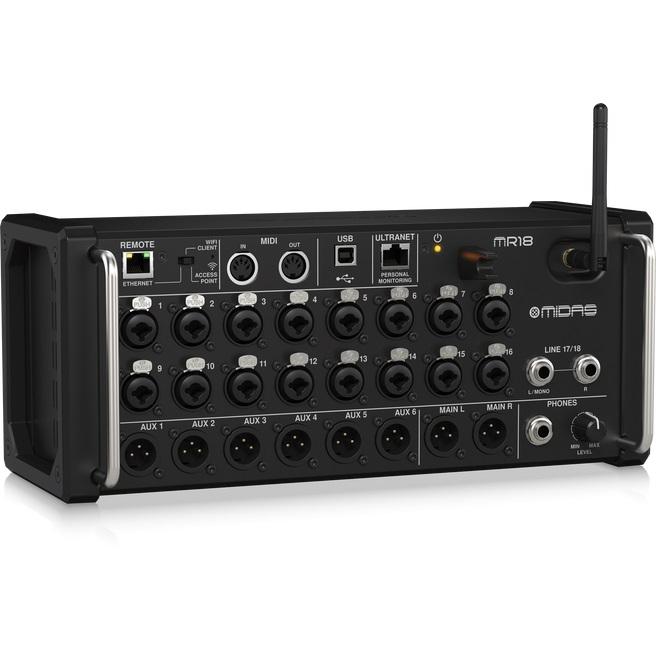
Digital in a lunchbox: Midas MR18
The Midas MR18 is the quiet revolution: 16 Midas preamps in a stagebox-sized unit you mix entirely from a tablet. Walk the room while you EQ it, stand next to the drummer while you build their monitor mix, save the whole show and recall it next month. For bands, portable PAs and churches with a rotating volunteer roster — every service loads from the same saved scene — it is the value benchmark, and it pairs naturally with the FBT active speakers we recommend as our house PA brand.
Screens and faders together: Allen & Heath CQ
If a tablet-only mixer feels like a step too far for your volunteers, Allen & Heath's CQ range is the halfway house — the CQ18T puts a bright touchscreen and physical fader on the desk, adds Bluetooth and direct-to-SD multitrack recording, and its gain assistant and automatic feedback control genuinely help untrained operators sound good.
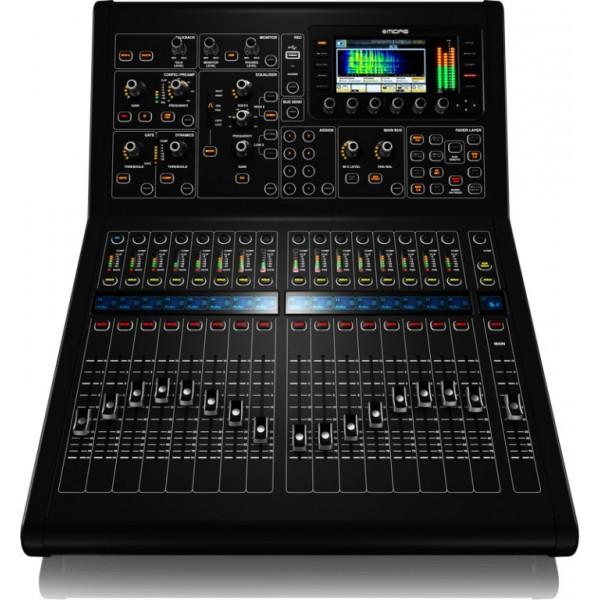
The venue standard: Midas M32
When you need a real surface — motorised faders, a fader per channel, an operator mixing a band properly — the M32 platform is the small-venue standard worldwide. The M32R LIVE fits 32 channels of that ecosystem into a desk two people can lift, the full-size M32 LIVE is the front-of-house workhorse, and a DL16 stage box puts the preamps on stage with one cat5 line back to the desk — no more multicore snake.
The rule of thumb
Volunteers and rotating operators: CQ18T or MR18 with saved scenes. A resident tech mixing bands: M32R and a stage box. One desk for teaching everyone the basics: analogue. Still torn? Tell us your channel list and who mixes — we will shortlist two desks and tell you why.